
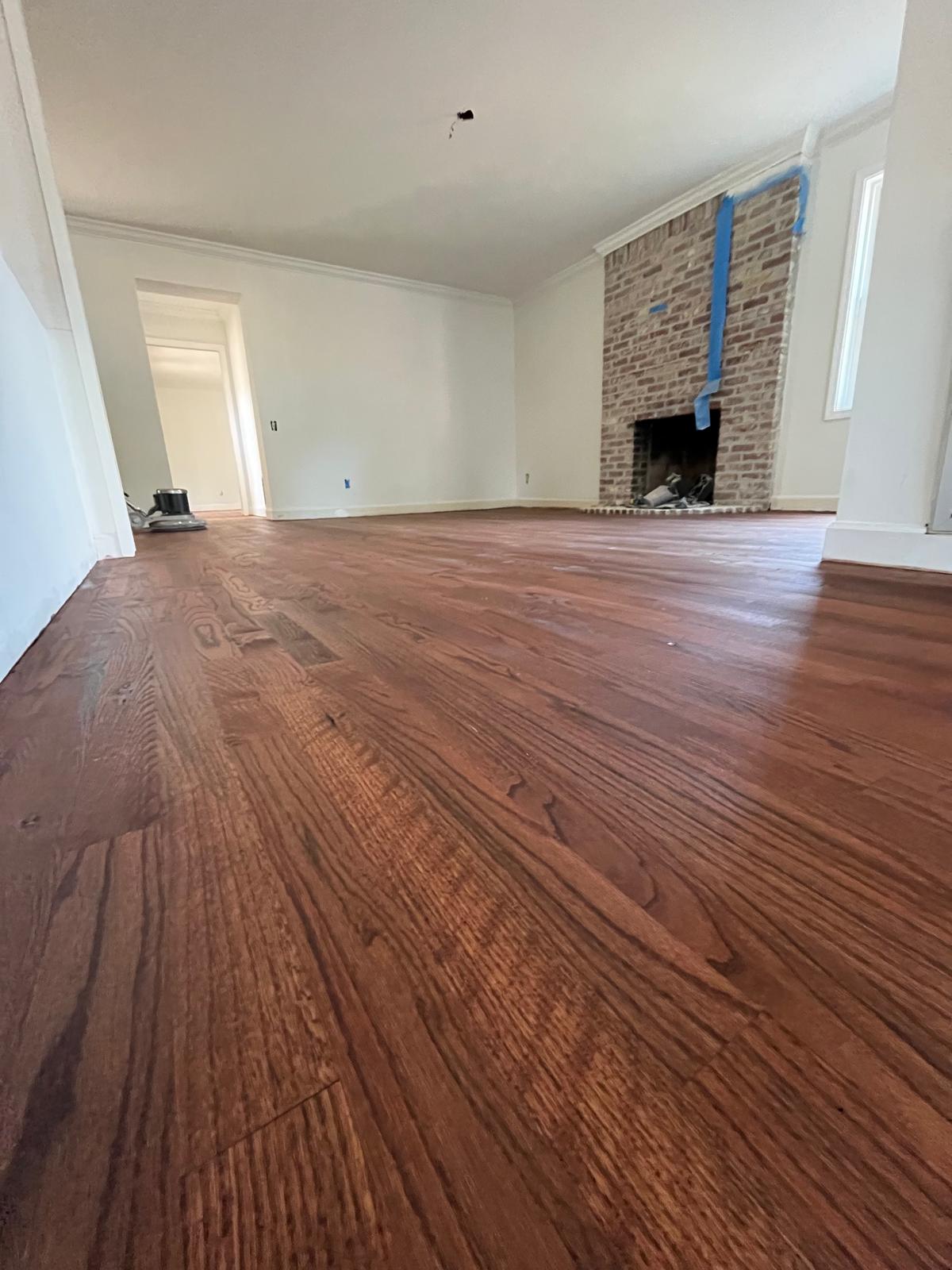
Charleston summers are no joke — the heat, the salt air off the harbor, the kind of humidity that makes your hair do things you didn't ask for. Your floors feel it too. Picking the wrong material here isn't just a style mistake; it can mean warping, buckling, and mold problems within a few years. Here's what actually holds up.
Why Humidity Is the #1 Enemy of the Wrong Floor
Charleston sits right on the coast of South Carolina, and the greater metro — Mount Pleasant, Goose Creek, North Charleston, Ladson — doesn't get much relief. Average relative humidity hovers between 70–80% in summer, and indoor humidity can spike even higher if your HVAC struggles or a crawl space isn't properly encapsulated.
Wood and moisture-sensitive materials react predictably to this: they expand when they absorb humidity and contract when it drops. Do that cycle enough times — summer to winter, or even just day to night in a poorly ventilated room — and you'll start seeing gaps, cupping (where the edges of boards rise higher than the center), or full-on buckling where boards pop up from the subfloor.
The good news is that not all flooring reacts the same way. Some materials are built to handle exactly this kind of environment. Others aren't, and no amount of finish or sealant will change that fundamental reality.
The Best Flooring Options for South Carolina's Climate
1. Luxury Vinyl Plank (LVP) — The Clear Winner for Most Homes
If you live in Charleston and you want something that will not move, not warp, and not grow mold — LVP is your answer. It's 100% waterproof, dimensionally stable, and handles the humidity swings that come with coastal South Carolina living without flinching.
Modern LVP has come a long way from the vinyl flooring of the 1980s. Today's product — brands like Shaw, COREtec, and Pergo — has a realistic wood or stone look, a wear layer thick enough to handle kids and pets, and it installs over almost any existing subfloor. We install a lot of it in homes with concrete slabs (super common in Lowcountry construction) where moisture vapor from the ground makes other materials risky.
- Best for: Kitchens, bathrooms, laundry rooms, basements, slab foundations, beach houses, rental properties
- Humidity resistance: Excellent — 100% waterproof core
- Cost range: $3–$7/sq ft material + installation
- Lifespan: 15–25 years with proper care
One thing to watch: not all LVP is created equal. Thinner products (under 6mm) tend to feel hollow underfoot and show subfloor imperfections. We generally recommend 8mm or thicker with an attached underlayment for the best result in Charleston homes.
2. Engineered Hardwood — Real Wood That Actually Works Here
If you want genuine hardwood — the warmth, the grain, the character that only real wood has — engineered hardwood is the version that makes sense in a humid climate like ours. Unlike solid hardwood, which is a single thick plank that moves a lot with moisture, engineered hardwood has a real wood veneer bonded to a plywood or HDF core. That layered construction dramatically reduces expansion and contraction.
We install engineered hardwood across Charleston regularly, and it performs beautifully when a few conditions are met: the subfloor is level, the home has a functioning HVAC system that keeps indoor humidity roughly between 35–55%, and it's not going in a bathroom or other area with standing water risk.
- Best for: Living rooms, dining rooms, bedrooms, historic homes where hardwood is expected
- Humidity resistance: Good — far better than solid hardwood, but not waterproof
- Cost range: $5–$12/sq ft material + installation
- Lifespan: 20–30+ years; can often be refinished 1–2 times depending on veneer thickness
3. Tile — Unbeatable in Wet Zones
For bathrooms, kitchens, mudrooms, and covered porches, tile remains the gold standard. Porcelain especially is essentially impervious to moisture and will outlast anything else you put on the floor — often 50+ years with proper installation.
The key word there is "proper installation." Tile in South Carolina fails almost exclusively because of bad prep — uneven subfloors, wrong mortar, or grout that wasn't sealed. When it's done right, you'll never think about it again. We do a lot of bathroom tile work in the Charleston area, and it's one of those things where the prep work is 80% of the job.
- Best for: Bathrooms, kitchens, laundry rooms, entryways, sunrooms
- Humidity resistance: Excellent — completely impervious when installed correctly
- Cost range: $6–$15/sq ft material + installation depending on tile type and complexity
- Lifespan: Decades, often 30–50+ years
Side-by-Side Comparison
| Flooring Type | Humidity Resistance | Best Rooms | Refinishable? | Avg. Lifespan |
|---|---|---|---|---|
| LVP / Vinyl Plank | ⭐⭐⭐⭐⭐ Excellent | Any room, any level | No | 15–25 years |
| Engineered Hardwood | ⭐⭐⭐⭐ Good | Living areas, bedrooms | Yes (1–2x) | 20–30+ years |
| Porcelain / Ceramic Tile | ⭐⭐⭐⭐⭐ Excellent | Wet areas, entries | No | 30–50+ years |
| Solid Hardwood | ⭐⭐ Poor (coastal SC) | Interior rooms only, with HVAC control | Yes (multiple) | 50+ years (if managed) |
| Laminate | ⭐⭐ Poor | Dry interior rooms only | No | 10–15 years |
What to Avoid (or Approach Carefully) in Charleston
Solid Hardwood — Not Impossible, But Risky
This is the one that causes the most debate. Solid hardwood is beautiful, it's what the Lowcountry's historic homes were built with, and it can absolutely last a lifetime. But it requires a level of humidity management that a lot of modern homes — especially those with crawl spaces or inconsistent HVAC — can't reliably provide.
If you have a well-sealed home, a dehumidifier in the crawl space, and a good HVAC system that keeps interior humidity stable, solid hardwood can work. But if your house breathes a lot, or you're going above a slab or concrete subfloor, the risk of cupping and gapping is real. We're honest about this in every consultation.
Laminate — Looks Like Wood, Handles Humidity Poorly
Standard laminate is made of a wood-fiber core with a photographic layer on top. That wood-fiber core is essentially compressed sawdust, and it swells when it gets wet. If a glass of water sits on a laminate floor long enough, or a window leaks during a storm, or the bathroom develops a slow drip — you'll see the floor start to bubble and delaminate. In Charleston's climate, that's just a matter of time.
There are some newer "waterproof laminate" products marketed to address this, but they vary wildly in quality. For the price point, LVP simply makes more sense in our climate.
The Crawl Space Factor
A lot of homes in the Charleston area — particularly in older neighborhoods and anywhere in the coastal floodplain — are built on crawl spaces rather than slabs. An unsealed or poorly ventilated crawl space is essentially a moisture factory sitting directly under your floors.
We always ask about crawl space conditions before recommending flooring for ground-level rooms. If it's not encapsulated, even the best LVP can eventually feel soft or develop mold underneath from moisture migrating up through the subfloor. This is one of those things that's not always glamorous to talk about, but it saves homeowners a lot of money down the road.
So What Should You Choose?
The honest answer depends on the room, your budget, and the specific conditions of your home. Here's how we usually think about it for clients in the Charleston area:
- If you want zero moisture worry anywhere in the house → LVP throughout
- If you want real wood in main living areas and have a controlled climate → Engineered hardwood
- If it's a bathroom, kitchen, or wet area → Porcelain tile
- If you have existing hardwood you want to save → Refinishing, not replacement
- If you're on a budget and in a dry room → Laminate can work, just manage moisture carefully
When Rogerio walks through a home before giving a quote, this is exactly the thought process he uses. It's not about pushing a particular product — it's about understanding the house and giving you something that's going to look good and hold up five, ten, twenty years from now.
Not sure what your home needs?
We'll walk through the space with you, look at your subfloor conditions, and give you an honest recommendation — no pressure, no upsell.
📞 (843) 543-9802 — Call or Text.jpeg)
.jpeg)